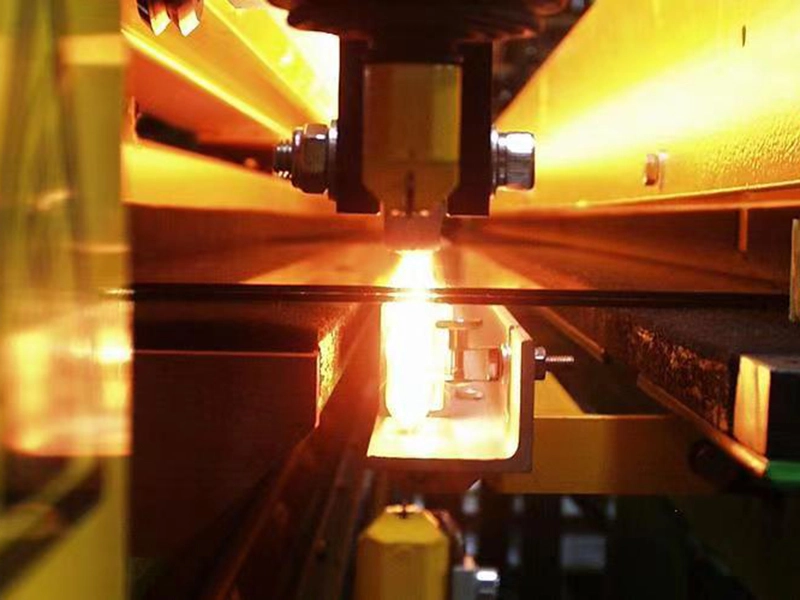
Ever had a piece of glass shatter the second you tried to cut it? That’s thermal shock. It happens when the temperature jumps too fast for the glass to handle, and it’s a nightmare when you’re trying to keep a production line moving. To stop this, we use shortwave infrared (IR) preheating lamps. Think of it as a “warm-up” for the glass. These lamps hit the surface right before the cutting head arrives, easing the internal stress so the break is clean and predictable. Getting the heat right You can’t just turn a heater on and hope for the best. You need something that reacts instantly. We use high-wattage shortwave emitters because they don’t waste time heating up the air around them—they dump energy straight into the glass. We wire these into an SCR or a fast-switching PID controller. This means we can dial the power up in milliseconds as the cutter closes in, and kill the heat the second the cut is done. It’s precise. Fast. And it saves you from wasting energy. The gear we use Most of our CNC rigs run on quartz-halogen tubes. They’re great for “flash heating,” which is exactly what you need here. We usually stick with R7s or SK15 connectors. Why? Because CNC machines vibrate. A lot. These connectors stay tight and won’t wiggle loose while the machine is flying across the table. Plus, since it’s shortwave, you get deep heat without needing a massive, bulky lamp housing. The trade-offs Here’s the catch: all that heat has to go somewhere. When these lamps are pinned at peak wattage, the quartz gets incredibly hot. If you aren’t careful, you’ll fry your electronics. You’ve got to use heat-resistant alloys for the housing and make sure your cooling fans are actually pulling the hot air away from the brain of the machine. If your airflow gets blocked, you’re going to burn out your sockets. It’s a pain, but I always recommend checking the connector tension every 500 hours. A little bit of maintenance now saves you from a nasty electrical arc later.