
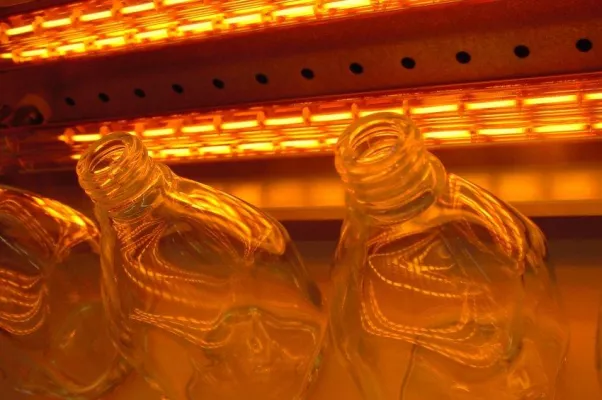
Dealing with Tight Spaces in Custom Bending Furnaces
If you’ve ever tried to spec out a non-standard bending furnace, you know the struggle. Space is usually your biggest headache. The problem with those off-the-shelf IR lamps is that they’re… well, standard. They don’t care about the actual shape of your workpiece. This usually leads to “dead zones” where the metal stays cold, or worst-case scenario, hot spots that ruin the part. We handle this by pairing custom-length IR lamps with aluminum reflectors that are actually built for your machine.
Why the reflector matters
Think about it: an IR lamp without a reflector is basically wasting half its energy. The heat just radiates backward into the furnace chassis. Not a great use of power. We use high-purity aluminum because it’s incredibly good at bouncing infrared waves back toward the target. By getting the curvature just right, we can push that heat exactly where the bend happens. It’s the difference between a floodlight and a laser.
Fitting into awkward footprints
Standard straight tubes are great—until you’re working in a cramped bending cell. Then they’re just in the way. That’s why we build reflectors in whatever weird lengths or irregular shapes your machine requires. If you need a deep parabolic curve to focus the heat into a tiny spot, we can do that. If you need a shallow arc to spread the heat out, we’ve got you covered. Just send over your CAD drawing and we’ll make it happen. As for the finish, you’ve got two choices. Polished aluminum is the gold standard for reflectivity. But if your shop is full of corrosive fumes or heavy oxidation, go with the anodized coating. It’ll last a lot longer in a harsh environment.
A few things to watch out for
Here’s the catch: when you concentrate heat like this, you’re putting more thermal stress on the ends of the lamp. If you’re pushing for extreme heat density in a tiny area, your power supply needs to be rock solid. Voltage spikes in a tight array can fry filaments way faster than in a spacious layout. One last tip? Double-check your wiring clearance. You don’t want “heat soak” creeping into your connector terminals, or you’ll be replacing parts a lot sooner than you’d like.