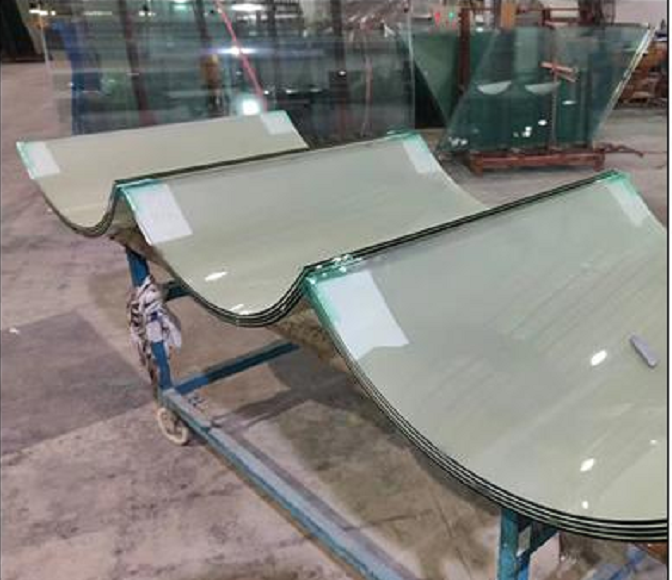
Out on the line, heat is more than just a number on the pyrometer. It’s timing, it’s uniformity, and it’s repeatability—every cycle. If the warm-up drags or the thermal profile drifts during tempering, bending, or coating drying, you’re inviting thermal stress. That’s how you end up with hairline cracks, bow, or optical distortion. The quartz halogen emitter bulb is what we lean on to keep that profile steady, shift after shift. Here’s what matters under the hood. Quartz halogen emitters throw short-wave infrared energy with fast response, hitting the absorption behavior of glass and coated surfaces right where it counts. The halogen cycle keeps the filament temperature stable, so output stays consistent over the life of the bulb. We match the emitter to your process window—watt density and spectral output tuned for glass—so you get rapid heat-up without hot spots. Standard configurations cover common voltages and fixture interfaces, so it drops straight into OEM heating modules. Why this works where we work. In tempering, the surface has to hit the quench threshold fast and even. The short-wave output cuts warm-up time and keeps heat uniform across the sheet. In bending, repeatable heating cuts down on sag variability and keeps the shape inside tolerance. For coating drying and lamination prep—EVA, SGP, PVB—that same rapid, directional heat minimizes convection effects and helps you avoid bubbles and haze. The payoff is fewer rejects, better flatness, and throughput you can plan around. A few shop-floor reminders. Quartz halogen bulbs run hot at the surface, so clearance and shielding have to match your machine design. Keep reflectors clean and aligned—when reflectivity drops, uniformity goes with it. Match the emitter to the absorption of the specific glass and coating, or you’ll overshoot the surface while the bulk lags and create thermal gradients. Set up routine inspection and replacement intervals, and you’ll keep the thermal profile locked in.