Fixing Those Annoying Cold Spots in Glass Annealing
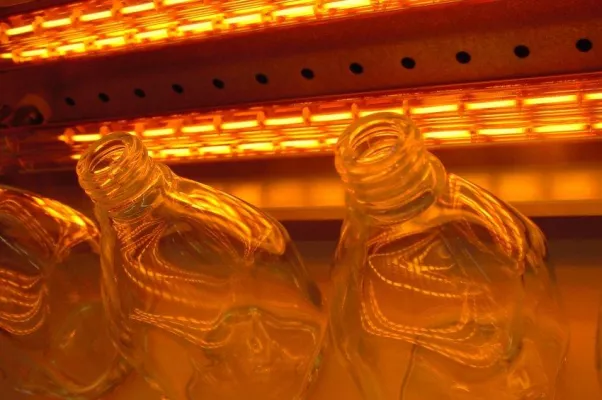
If you’ve ever worked with glassware that has a weird shape—think narrow necks or deep, chunky bases—you know the nightmare of “dead zones.” You put everything in the kiln, you wait, and then crack. Internal stress wins because the heat just couldn’t reach the tight spots. Standard heaters rely on moving air, but air is lazy. It flows around the easy parts and ignores the hard-to-reach corners. That’s why we switched to long-life infrared heating tubes. Instead of trying to push hot air into a narrow opening, we use direct radiation. How it actually works Think of it like the sun. It doesn’t need a breeze to make you feel warm; the energy just hits you. Infrared waves do the same thing. They soak right into the glass, regardless of how many air gaps are in the way. To make sure there isn’t a single cold spot left, we set these tubes up in overlapping arrays. By crisscrossing the heat patterns, every curve of a flask or beaker gets hit consistently. No more guessing if the bottom of the vessel actually got hot enough. The gear under the hood We use high-purity quartz for the tubes because annealing cycles are brutal on equipment. To keep them from burning out, we use a specific tungsten filament and a halogen gas fill. This stops the filament from evaporating too fast, so you get a steady, reliable wattage for thousands of hours. We can build these to fit whatever space you already have. Just a heads-up: if you go with high-density tubes, your kiln’s outer shell is going to feel a lot more heat. Double-check your insulation so you don’t accidentally cook your chassis. Getting them running These are basically drop-in replacements. We’ve got a few different end-cap options, so you aren’t spending all day messing with the wiring. One thing, though:be gentle. Quartz is tough against heat, but it’s fragile. If your mounting brackets are too tight or putting pressure on the tube, it’ll pop. It’s a bit of a balancing act. If you pack the tubes too close, you’ll overheat the glass. Too far apart, and those dead zones come creeping back. Find that sweet spot, and you’re golden.